These conferences provided complementary opportunities to share our latest research results on the Default Mode Network neuromodulation. How did these events go and what findings did we present? Let's take a closer look.
Demonstrating DMN Neuromodulation Research: SfN25 & UCSD
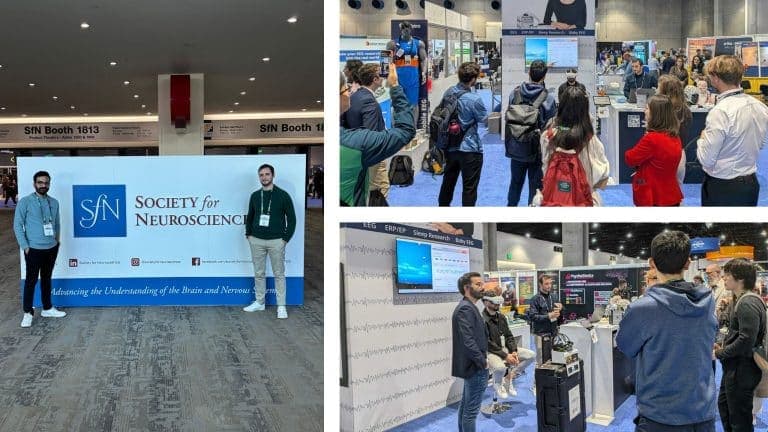
November 2025 marked a milestone for Neuromind as we had the opportunity to showcase our scientific advances at two major events in the United States: the Society for Neuroscience annual meeting and the UC San Diego Pain and Neuroscience Symposium.
CONTEXT.
01
SfN annual meeting in 2025: presenting new evidence on the Default Mode Network neuromodulation
INTRODUCING NEUROMIND AT A GLOBAL NEUROSCIENCE CONFERENCE.
The annual meeting of the Society for Neuroscience (SfN) is one of the largest international conferences dedicated to brain research. Each year since 1971, tens of thousands of participants, including neuroscientists, clinicians, engineers and industry partners, gather to:
present cutting-edge research;
discuss emerging methodologies;
explore advances in the field of neuroscience.
BACKGROUND.
The first presentation of Neuromind's work took place a year prior, at the SfN meeting of 2024. At the time, we introduced the first prototype of our immersive neurofeedback platform and conducted live demonstrations in collaboration with our partner Brain Products. This opportunity allowed us to demonstrate the potential of combining real-time EEG neurofeedback with immersive virtual reality to support mindfulness-based cognitive states and emotional regulation. Building on this first introduction, we returned to SfN 2025 to share new experimental results and to continue discussions with researchers working on brain networks, neurotechnology and clinical neuroscience.
02
What our latest data reveal about the DMN
THE CONTEXT OF OUR DMN NEUROMODULATION RESEARCH.
Modern environments constantly compete for our attention. Continuous notifications, multitasking, and cognitive overload contribute to mental fatigue, stress, and difficulty maintaining focus. Neuroscience research suggests that part of this challenge is linked to the Default Mode Network (DMN), a large-scale brain network including regions such as the posterior cingulate cortex (PCC) and medial prefrontal cortex (mPFC). The DMN is associated with internally oriented mental activity such as:
mind-wandering;
self-referential thinking;
rumination.
When excessively active, it can make it harder to remain engaged with the present moment. Mindfulness practices are known to help regulate these brain states and reduce stress. However, learning mindfulness typically requires sustained training and regular practice, which can make it difficult for many people to access its benefits.
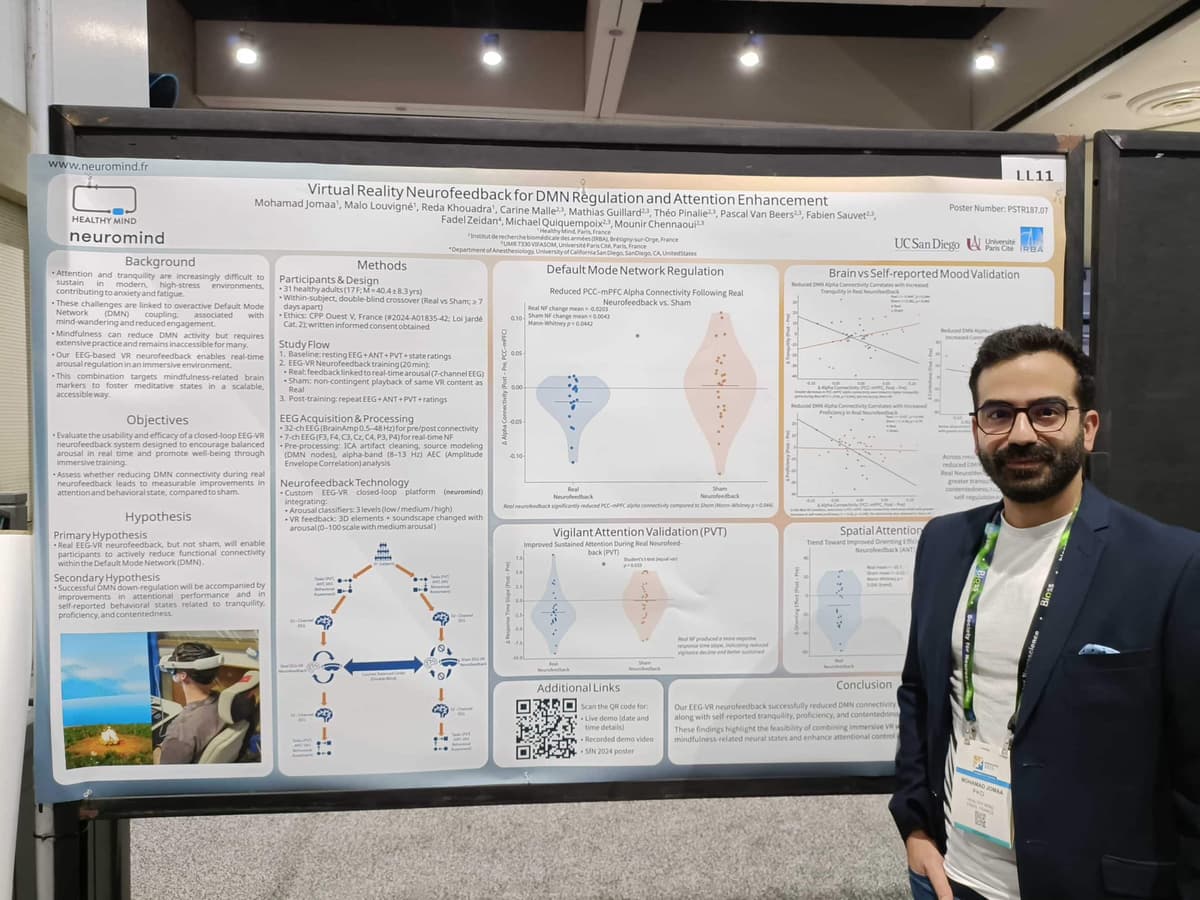
THE SCOPE AND FINDINGS OF OUR STUDY.
To address this challenge, we developed an EEG-based virtual reality neurofeedback system that allows users to learn self-regulation in real time. By measuring brain activity through EEG and adapting the immersive VR environment accordingly, the system creates a closed feedback loop that helps users modulate their level of emotional arousal and attentional engagement. To evaluate this approach, we conducted a study with 31 healthy adults using a double-blind crossover design, comparing real neurofeedback with a sham condition. Our research focused on whether this closed-loop system could promote well-being and improve attentional and behavioral states. Our results suggest that the system successfully reduced connectivity within the Default Mode Network while enhancing sustained and spatial attention. Beyond these measurable cognitive effects, participants also reported feeling calmer, more focused, and more in control during the experience.
03
UC San Diego Pain and Neuroscience Symposium: bridging research and clinical applications
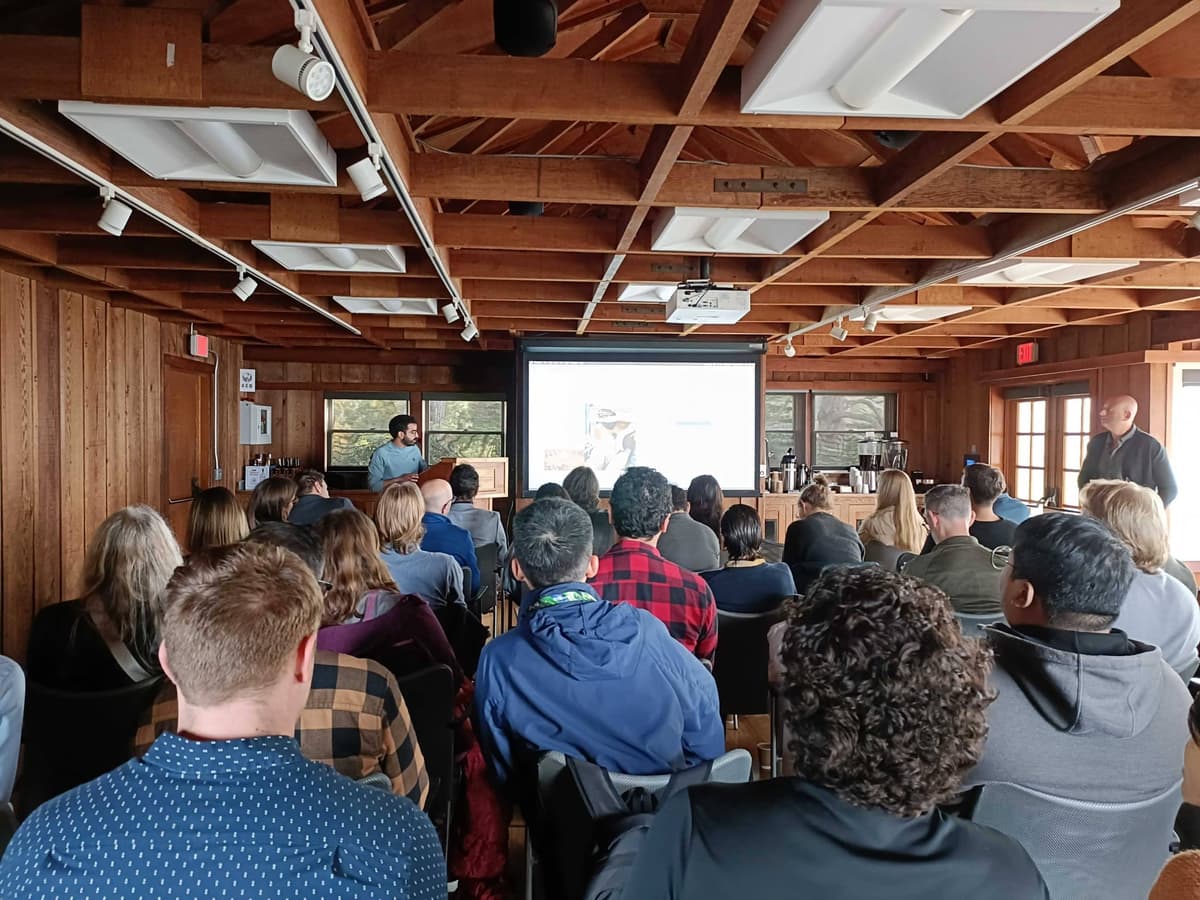
A FOCUSED FORUM ON PAIN AND BRAIN MECHANISMS.
Following the SfN 2025 meeting, Neuromind's presentation continued at the UC San Diego Pain and Neuroscience Symposium, organised by neuroscientist Fadel Zeidan and hosted by the UCSD Anesthesiology Department. This symposium brought together researchers and clinicians studying:
the neural mechanisms underlying pain perception;
cognitive modulation of pain;
therapeutic approaches grounded in neuroscience.
Compared with large international congresses, it provided a more focused environment that encouraged deeper scientific discussions among specialists working on related topics.
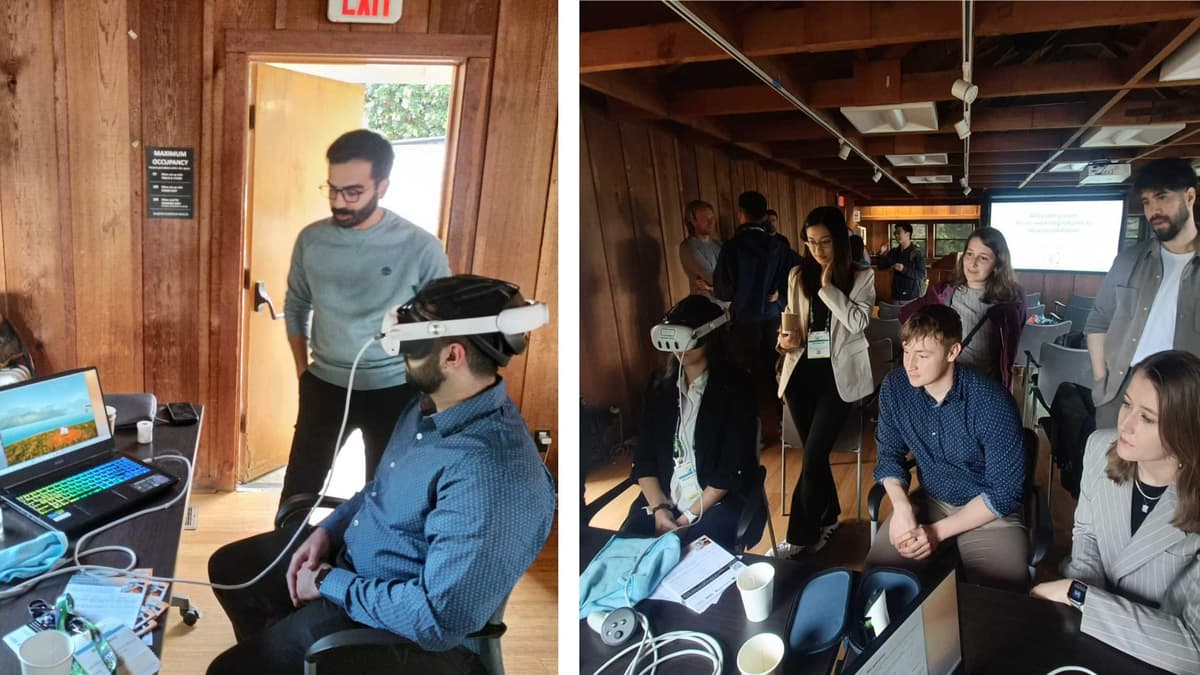
OUR DMN RESEARCH RESULTS IN A CLINICAL NEUROSCIENCE CONTEXT.
Large-scale networks such as the Default Mode Network are increasingly studied in relation to chronic pain and mental health conditions. The ability to monitor and influence these systems through neurofeedback-based approaches therefore raises important questions for clinical neuroscience. Our discussions at the symposium focused on how immersive neurotechnology and real-time neural monitoring may support future research on brain-based therapeutic interventions and digital therapeutics. As our study showed, combining immersive VR with real-time EEG regulation promotes mindfulness-related neural states and enhances attentional control in a scalable, engaging format.
04
From data to demonstration: two events that bring scientific validation to Neuromind
IMPACT.
Together, these two events illustrate complementary aspects of Neuromind's scientific approach. The presentation at the SfN annual meeting enabled Neuromind to share its latest DMN research with the global neuroscience community and to demonstrate the integration of its solution within established neurotechnology ecosystems. The UC San Diego Pain and Neuroscience Symposium, in turn, provided a focused forum to discuss the clinical relevance of these findings with experts studying pain, cognition and brain network regulation. By participating in these scientific events, we continue to strengthen the scientific validation of our work while contributing to ongoing research on brain network modulation in clinical neuroscience.
QUOTE.
"Presenting our work at SfN and the UC San Diego Pain and Neuroscience Symposium was an important opportunity to share how AI-driven EEG neurofeedback combined with immersive virtual reality can help regulate brain states associated with mindfulness. Our goal is to make these beneficial neural states more accessible by allowing users to interact directly with their own brain activity and learn self-regulation in real time."
— Mohamad Jomaa, Lead Neuroscience & AI of Neuromind.
We look forward to future collaborations that will help bring our transformative technology to those who need it most. For further information or to organise a demonstration, please contact our team.
Contact. If you would like further information or a demonstration of our solution, please contact us using the following link